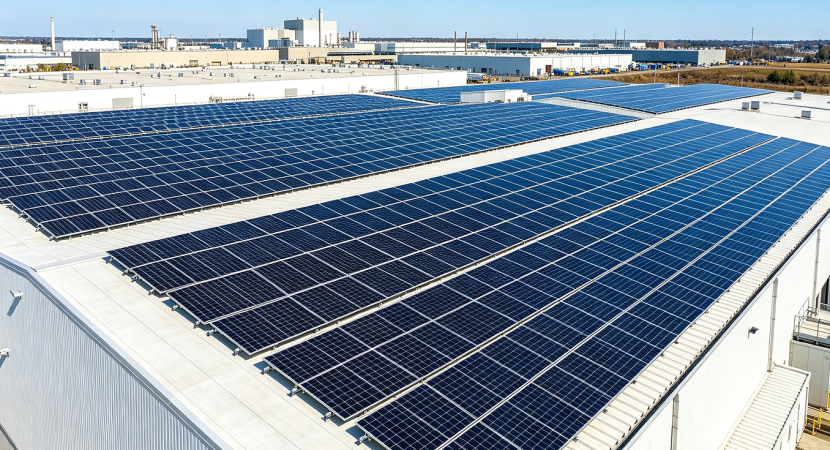
Solar Panel

Maximize biogas value, cut electricity costs, zero carbon energy solution

Product Overview

High‑efficiency N‑type monocrystalline solar modules adopt TOPCon half‑cell & SMBB multi‑busbar technology, available in mono‑facial and bifacial dual‑glass versions with power range from 430W‑750W. Modules convert sunlight into electricity. They can work standalone or perfectly cooperate with energy storage systems, generator sets and EMS comprehensive energy management system. Widely deployed for commercial & industrial rooftops, ground‑mount power stations, farms, mines and off‑grid island projects. Featuring high power output, excellent low‑light performance and robust weather‑resistant construction, it reduces LCOE, accelerates ROI and delivers low‑carbon clean power supply。

Key Highlights

✅ N‑type high‑efficiency cells, low LID, higher long‑term energy yield

✅ Optional bifacial dual‑glass design, extra 15‑30% power gain from albedo reflection

✅ Half‑cell + SMBB multi‑busbar design, lower internal loss, better crack‑resistance & shadow tolerance

✅ Superior temperature coefficient, stable power generation even under high‑temperature conditions

✅ Dual‑glass construction, anti‑corrosion, anti‑salt‑mist and hail‑resistant, fit for coastal, dusty harsh environments

✅ Compatible with grid‑tied & off‑grid microgrid, can integrate with battery storage and generators to build PV‑storage‑generator hybrid system

✅ Global authoritative certifications and complete warranty support for worldwide overseas projects

Technical Advantages

1. High Power Performance

N‑type TOPCon cell with non‑destructive half‑cut technology reduces current loss. Outstanding output under low‑light conditions such as dawn, dusk and cloudy days. Bifacial version reaches 80‑85% bifaciality; reflected light from ground or snow can be captured by rear side for extra power gain.

2. Low Degradation

N‑type technology brings ultra‑low LID. First‑year degradation ≤1.0%, 30‑year linear degradation ≤0.4%. Compared with traditional P‑type modules, it maintains higher residual power over lifetime for better total return.

3. Robust Environmental Durability

Dual‑glass module uses double tempered glass to avoid back‑sheet aging. Passed salt‑mist, ammonia corrosion, sand‑dust and hail impact tests. Mechanical load: front side 5400Pa, rear side 2400Pa. Well adapted to typhoon, sand and coastal corrosive climate for Southeast Asia, Africa and other overseas regions.

4. Excellent System Compatibility

Electrical parameters match mainstream inverters and combiner boxes. Seamlessly compatible with PCS, EMS energy management platform, diesel / biogas generators for PV‑storage‑generator microgrid. Support rooftop racking and ground tracker mounting, reduce BOS cost and shorten project payback period.

Application Scenarios

  • C&I Rooftop: Factories, industrial parks and warehouses for self‑consumption to cut electricity bills
  • Large‑scale ground‑mount solar farms on hills or wasteland
  • Farms & waste treatment plants: hybrid solution together with biogas generator sets
  • Off‑grid microgrid: islands, mines and remote areas, working with energy storage and generators
  • Overseas B2B projects: PV‑storage‑generator hybrid systems for weak‑grid regions in Southeast Asia, Africa

System Compatibility

These solar modules can build complete integrated energy solution with below equipment:

• PV inverters & DC combiner boxes

• Lithium‑ion energy storage system (PCS+BMS storage cabinet)

• Diesel generator set / biogas generator set

• EMS Energy Management System for intelligent scheduling, seamless grid‑connected / off‑grid switching

Warranty & Certifications

‑15‑year product workmanship warranty; 30‑year linear power performance warranty

‑Certified by IEC, TÜV, CE to meet global market access requirements

‑Datasheets, drawings and technical documents available for overseas bidding projects

Frequently Asked Questions

How do I decide how big my solar system should be?
Multiple factors determine the optimal size of a solar system, including on‑site energy consumption, available installation space, local solar irradiance, and whether it works with energy storage and generator sets.
Solar panel power capacity is measured in Watts(W). Our mainstream modules range from 430W‑750W.
For grid‑connected C&I projects, we mainly calculate based on actual daily power consumption. For off‑grid microgrid projects with storage and generators, load profile and backup requirements will also be taken into consideration for system sizing.
Can photovoltaic panels be used together with energy storage and generators?
Yes. With inverter and EMS energy management system, PV supplies power first. Surplus power charges energy storage. When sunlight is insufficient, storage discharges. Generators will auto‑start when SOC drops low for stable uninterrupted power supply.
What are the advantages of bifacial modules compared to monofacial ones?
Bifacial dual‑glass modules capture reflected light from ground or snow. It brings extra 15‑30% energy gain depending on albedo, with longer service life and better corrosion resistance, ideal for ground‑mount stations and farms.
What’s the energy payback time for making a solar panel?
For our high‑efficiency N‑type TOPCon solar modules, the energy payback time (EPBT) typically ranges from 1.2 – 2.0 years, depending on local solar irradiation conditions.
It means the module will generate enough clean energy to offset all energy consumed during raw‑material extraction, cell manufacturing and panel assembly within 1.2‑2.0 years of operation.
With a service life over 30 years, the module will produce far more renewable energy than the total energy used for its production.
For bifacial dual‑glass modules, higher actual power yield can further shorten the energy payback period.

Let’s Start Work Together

No. 174 Xiangshan Avenue, Luotian community, Yanluo street, Bao’an District, Shenzhen China. 518106

info@shieldpowerltd.com
9.00 Am – 18.00 Pm

Cart (0 items)